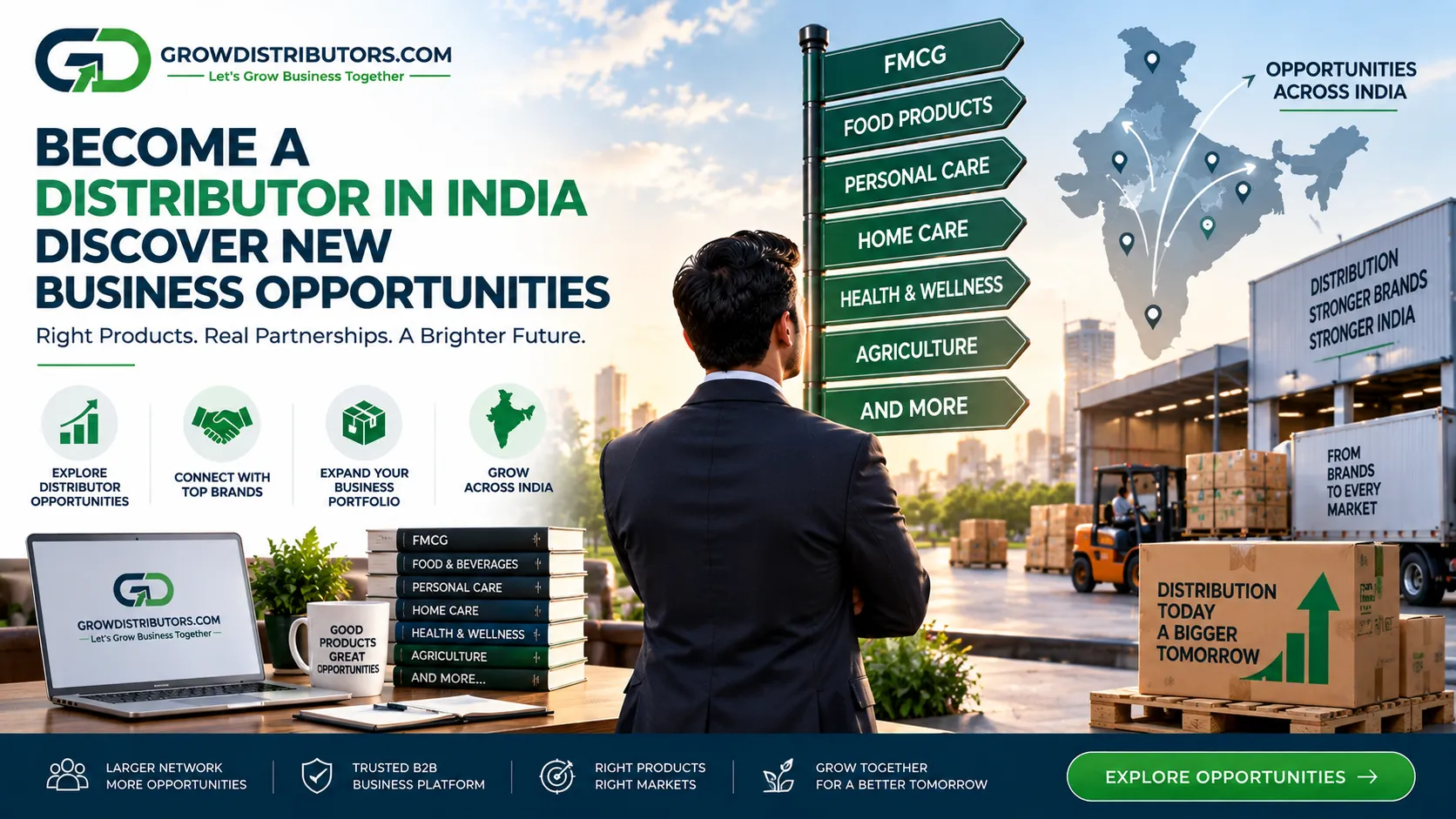
How to Become a Distributor in India and Discover New Business Opportunities
India's growing consumer market has created opportunities for entrepreneurs, wholesalers and existing retailers to expand into distribution.
For someone looking to become a distributor, the opportunity can be attractive because distributors play an important role in moving products from manufacturers and brands to retailers and customers.
However, becoming a distributor is a business decision that requires proper research. Choosing the right product, understanding the market and evaluating the company's commercial terms are all important before starting.
What Does a Distributor Do?
A distributor purchases or handles products from manufacturers or brands and helps make those products available in a particular market.
Depending on the business model, distributors may be responsible for:
- Maintaining inventory
- Supplying retailers
- Managing orders
- Local transportation
- Building retailer relationships
- Sales and promotion
- Market development
The exact responsibilities depend on the agreement between the company and distributor.
Who Can Become a Distributor?
Distribution isn't limited to large companies.
Depending on the product and requirements, potential distributors can include:
- Wholesalers
- Retailers
- Entrepreneurs
- Trading businesses
- Stockists
- Existing distributors
- Regional business owners
- B2B sellers
Someone with an established retailer network may also find opportunities to add new product categories to their portfolio.
How to Become a Distributor
Step 1: Choose Your Product Category
Start with industries you understand.
For example:
- FMCG
- Food Products
- Spices
- Personal Care
- Home Care
- Consumer Goods
- Health & Wellness Products
- Agriculture Products
Understanding the market can make selling easier.
Step 2: Research Distribution Opportunities
Don't select the first opportunity you find.
Compare different distributor opportunities based on product demand, investment, margins, competition and company support.
Step 3: Evaluate the Investment
Understand all financial requirements before signing an agreement.
Ask about:
- Initial investment
- Minimum order quantity
- Security deposit
- Inventory requirement
- Working capital
- Transportation costs
- Marketing expenses
A clear financial picture helps you plan realistically.
Step 4: Understand the Territory
Ask whether the company provides:
- Exclusive territory
- Semi-exclusive territory
- Open distribution
- City-level distribution
- State-level distribution
Territory terms can significantly affect the business opportunity.
Exploring Distributorship Opportunities in India
Businesses searching for distributorship opportunities can find products across multiple categories.
FMCG is one of the major areas where distribution networks are particularly important because products need frequent movement through retail channels.
However, distributors should not choose an opportunity simply because the product is popular.
Consider whether the product fits your:
- Existing network
- Customer base
- Location
- Investment capacity
- Sales capability
- Storage infrastructure
A good business fit matters more than simply having a large product catalogue.
FMCG Companies Distributorship: What Should You Check?
People searching for FMCG company distributorship opportunities should carefully evaluate the company and product.
Before making a decision, ask:
Is there local demand?
What is the competition?
What are the commercial terms?
What investment is required?
What support does the company provide?
How reliable is the supply chain?
What type of retailer network is required?
These questions can help you compare opportunities objectively.
Distributor Opportunities Through GrowDistributors
Finding suitable brands can be difficult when you don't know where to look.
This is where GrowDistributors can help.
GrowDistributors is a B2B platform connecting manufacturers, brands and distributors.
For distributors, the platform can provide a place to discover:
- New brands
- Product categories
- Distribution opportunities
- Manufacturers
- Regional opportunities
- B2B business connections
For manufacturers, it provides an opportunity to showcase products and communicate distribution requirements.
This creates a two-sided business network where brands can look for distributors and distributors can discover brands.
Why Businesses Should Explore New Distribution Opportunities
An existing distributor may already have relationships with hundreds of retailers.
Adding a suitable new product to the portfolio can potentially create another revenue stream.
For example, an FMCG distributor already supplying grocery stores may explore complementary food, spice, or household-product brands.
However, every new product should be evaluated for demand, profitability, inventory requirements and operational feasibility.
What Makes a Good Distributor?
A good distributor is not necessarily the one with the biggest warehouse.
Successful distribution depends on several factors:
Strong Local Network
Relationships with retailers and businesses can help products reach the market.
Market Understanding
Knowing customer demand and local competition is valuable.
Consistent Operations
Inventory, orders and deliveries need to be managed efficiently.
Sales Capability
A distributor should have a practical plan for selling the products.
Financial Planning
Working capital should be sufficient for the business model.
Long-Term Approach
Strong manufacturer-distributor relationships generally require consistent communication and execution.
Final Thoughts
For entrepreneurs looking to become a distributor, India offers opportunities across a wide range of product categories.
The key is not simply to find a product. It is to find a business opportunity that fits your market, resources, network and capabilities.
Whether you are searching for distributor opportunities, distributorship opportunities, or FMCG companies distributorship, platforms such as GrowDistributors can help you discover B2B connections and explore potential partnerships.
Find the right products. Build the right network. Create opportunities for long-term business growth.
FAQs
1. How can I become a distributor in India?
Identify suitable product categories, research manufacturers, evaluate commercial terms and establish a distribution agreement with a company.
2. What investment is required to become a distributor?
Investment varies by company, product category, territory, inventory requirements and business model.
3. Where can I find distributor opportunities?
You can explore manufacturers, trade networks, exhibitions and B2B platforms such as GrowDistributors.
4. Is FMCG distribution profitable?
Profitability depends on product demand, margins, operating costs, competition, sales volume and the distributor's market capabilities.
5. Can existing wholesalers become distributors?
Yes. Wholesalers with suitable infrastructure and market networks may explore distribution partnerships, depending on the manufacturer's requirements.