How to Appoint Distributors in India | GrowDistributors
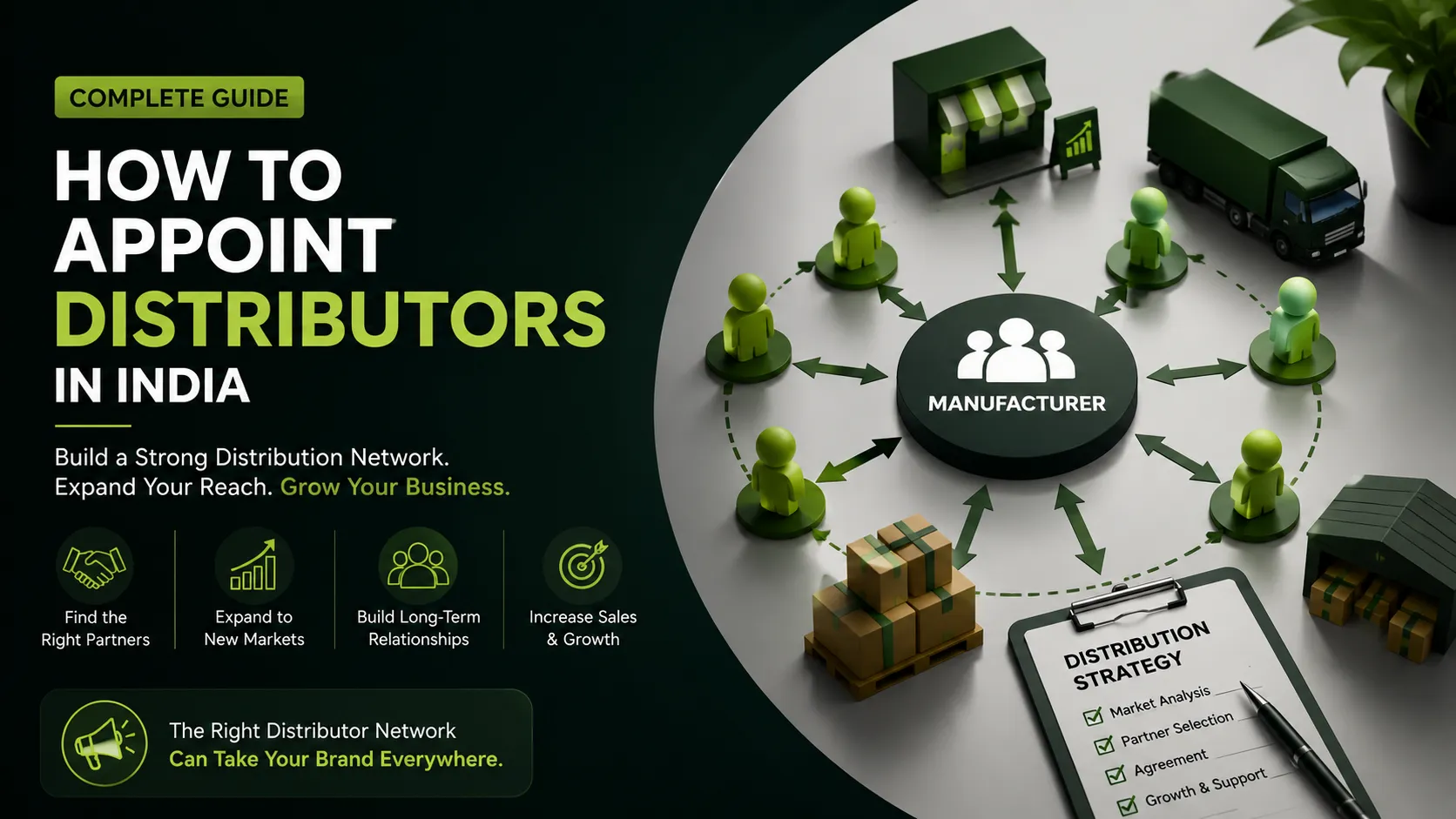
How to Appoint Distributors in India: A Complete Guide for Manufacturers
Expanding into new markets is one of the biggest growth opportunities for manufacturers and brands. However, reaching customers across multiple cities and states requires more than simply producing a good product. You need reliable partners who understand local markets, manage retailers, handle inventory, and help your products reach the right customers.
This is why building a strong distributor network for manufacturers is essential for businesses that want to scale efficiently. Whether you manufacture FMCG products, personal care items, agricultural products, food and beverages, homecare products, or other consumer goods, choosing the right distribution partners can directly influence your sales and market presence.
In this guide, we explain how to appoint distributors in India, what manufacturers should look for, and how platforms such as GrowDistributors can help businesses connect with potential distributors.
Why Do Manufacturers Need Distributors?
India is a large and diverse market with thousands of cities, districts, and local markets. Managing direct sales across every region can be expensive and operationally difficult.
A distributor acts as a bridge between the manufacturer and the market. Depending on the business model, distributors may purchase products, maintain inventory, supply retailers or dealers, and support local market expansion.
Some of the key distributorship benefits for manufacturers include:
- Faster expansion into new cities and regions
- Better access to local retailers and buyers
- Reduced dependency on building a direct sales team everywhere
- Improved inventory movement
- Better understanding of local market demand
- Opportunity to scale through an established distributorship business network
Key Distribution Data Points to Consider
Before appointing distributors, manufacturers should analyze important business data such as:
- Target locations: States, cities, districts, or regions where expansion is required
- Distributor investment capacity: The amount a potential distributor can invest in stock and operations
- Existing retail reach: Number and type of retailers already connected to the distributor
- Product margins: Distributor and retailer margins required for sustainable growth
- Sales targets: Expected monthly or quarterly sales performance
- Category competition: Existing brands and competitors operating in the target market
These factors can help companies build a more structured and scalable distribution strategy.
Step 1: Define Your Distribution Requirements
The first step in understanding how to appoint distributors in India is to clearly define what type of distributor your company needs.
For example, an FMCG manufacturer may need distributors with an existing network of grocery stores, supermarkets, and local retailers. A company selling agricultural products may require partners with connections to farmers, agricultural stores, and rural markets.
Before starting your search, define:
- Product category
- Target geographical locations
- Required investment capacity
- Expected sales experience
- Existing retailer or dealer network
- Warehouse or storage requirements
- Distribution margins
- Minimum order quantity
- Sales and growth targets
Having these requirements prepared makes it easier to identify suitable partners among the many companies looking for distributors in India and businesses offering distribution opportunities.
Step 2: Identify the Right Distributor Profile
Not every distributor is suitable for every product. A distributor with strong experience in electronics may not necessarily be the right choice for food products or personal care products.
Manufacturers should evaluate potential distributors based on:
- Experience in the relevant industry
- Existing retailer and dealer connections
- Financial capability
- Warehouse and logistics infrastructure
- Knowledge of the local market
- Sales team availability
- Previous brand associations
- Business reputation
The goal should not simply be to appoint the maximum number of distributors. Instead, businesses should focus on creating a reliable distributor network for manufacturers that can generate sustainable long-term sales.
Step 3: Promote Your Distributorship Opportunity
Once your distributor requirements are ready, you need to make your opportunity visible to potential business partners.
Manufacturers can promote dealership opportunities in India through multiple channels, including:
- B2B distributorship platforms
- Industry exhibitions and trade shows
- Business networking events
- LinkedIn and professional networks
- Digital marketing campaigns
- Industry associations
- Referral networks
For example, many FMCG companies looking for distributors need a targeted approach because they require partners with experience in handling retailers, stock movement, and fast-moving products.
Instead of relying only on traditional methods, digital B2B platforms can help manufacturers reach people who are actively searching for distribution and business opportunities.
Step 4: Use GrowDistributors to Find Potential Business Partners
GrowDistributors can help manufacturers and brands showcase their distributorship opportunities to individuals and businesses interested in becoming distributors.
A manufacturer can present important details about its business opportunity, such as:
- Company and brand information
- Product category
- Investment requirements
- Target locations
- Distributor requirements
- Product advantages
- Available margins and support
This can help businesses connect with potential partners interested in relevant distributors' business opportunities.
GrowDistributors can be useful for companies operating across multiple industries and categories, including:
- FMCG
- Food and beverages
- Health and personal care
- Beauty and cosmetics
- Homecare and cleaning products
- Agriculture and farming
- Apparel and fashion
- Houseware and supplies
- Ayurvedic and wellness products
- Electronics and other consumer product categories
By listing opportunities on a focused platform, manufacturers can simplify the process of finding and evaluating potential distribution partners.
Step 5: Screen and Verify Potential Distributors
Generating distributor inquiries is only the beginning. The next step is qualification.
Before appointing a distributor, manufacturers should verify:
- Business registration details
- GST and other applicable documentation
- Financial capability
- Existing distribution experience
- Retailer network
- Warehouse facilities
- Sales infrastructure
- Market reputation
You can also conduct interviews to understand whether the distributor has realistic expectations about investment, margins, sales targets, and market development.
A strong selection process can help businesses avoid appointing inactive partners and build a more effective distributorship business network.
Step 6: Create a Clear Distribution Agreement
Once you select a distributor, the responsibilities of both parties should be clearly documented.
A distribution agreement may include:
- Product pricing
- Distributor margins
- Payment terms
- Sales targets
- Territory or geographical coverage
- Minimum purchase requirements
- Inventory policies
- Marketing responsibilities
- Brand usage guidelines
- Termination conditions
Clear communication from the beginning can reduce misunderstandings and create a stronger business relationship.
Step 7: Support Your Distributors After Appointment
The process does not end after signing a distributor. To successfully build a distribution network in India, manufacturers need to support their partners consistently.
Effective support may include:
- Product training
- Sales training
- Marketing materials
- Promotional campaigns
- Retailer schemes
- Regular communication
- Inventory planning
- Performance reviews
Companies that actively support their distribution partners are more likely to develop stronger market coverage and long-term growth.
Final Thoughts
Understanding how to appoint distributors in India requires more than simply collecting business enquiries. Manufacturers need a clear distributor profile, a structured selection process, proper verification, and ongoing support.
India offers significant dealership opportunities in India across FMCG, agriculture, personal care, homecare, fashion, food, beverages, and many other industries. For manufacturers, the right distribution partners can make it easier to enter new markets and reach more retailers and customers.
Platforms such as GrowDistributors can support this process by helping businesses present their opportunities to potential distributors and connect with relevant business partners. With the right strategy, companies can gradually build distribution network in India and create a scalable presence across multiple regions.
Frequently Asked Questions
1. How do I appoint distributors for my company in India?
To appoint distributors, first define your requirements, including product category, target locations, investment capacity, and experience. Then promote your opportunity, collect enquiries, screen potential partners, verify their business capabilities, and finalize a clear distribution agreement.
2. What should I check before appointing a distributor?
You should evaluate the distributor's industry experience, financial capacity, retailer network, warehouse facilities, sales team, local market knowledge, and business reputation before making a decision.
3. Which industries can use a distributor network?
A distribution model can work across categories such as FMCG, food and beverages, agriculture, personal care, cosmetics, homecare, apparel, fashion, Ayurvedic products, houseware, and other consumer products.
4. How can FMCG companies find distributors?
FMCG companies looking for distributors can use B2B platforms, trade events, professional networks, referrals, and targeted digital marketing to reach potential distribution partners.
5. What are the main benefits of appointing distributors?
The major distributorship benefits include faster market expansion, access to local retailer networks, reduced operational complexity, improved product availability, and the ability to scale across different cities and regions.